Investment Recipes for the Passive Investor

The passive investor is someone who values simplicity, stability, and long-term clarity, but also recognizes that investing, while important, is not where they want to spend their time. They know they need to invest and genuinely value its role in their future, yet their primary focus is on other things: their career, family, passions, or personal projects. They prefer a clear, reliable plan that works quietly in the background, allowing compounding to do the heavy lifting. For them, passive investing is the perfect blend: essential for their goals but not a daily task competing for their attention. They want to make a simple decision, essentially set it and forget it, and let their money grow while they focus on everything else. The passive investor embraces a straightforward buy-and-hold investment strategy.


There are simple ways to participate in the market that don’t require day-to-day trading or deep research into individual companies. In fact, very few people can beat the market. A person must be really active in researching companies and truly understanding what they are viewing, in order to have better returns than the S&P 500 historically. Below are “recipes” for the passive investor to get started.

Recipe One – Two Layer Cake

Layer One: Start Broad with the S&P 500 (INDEXSP)


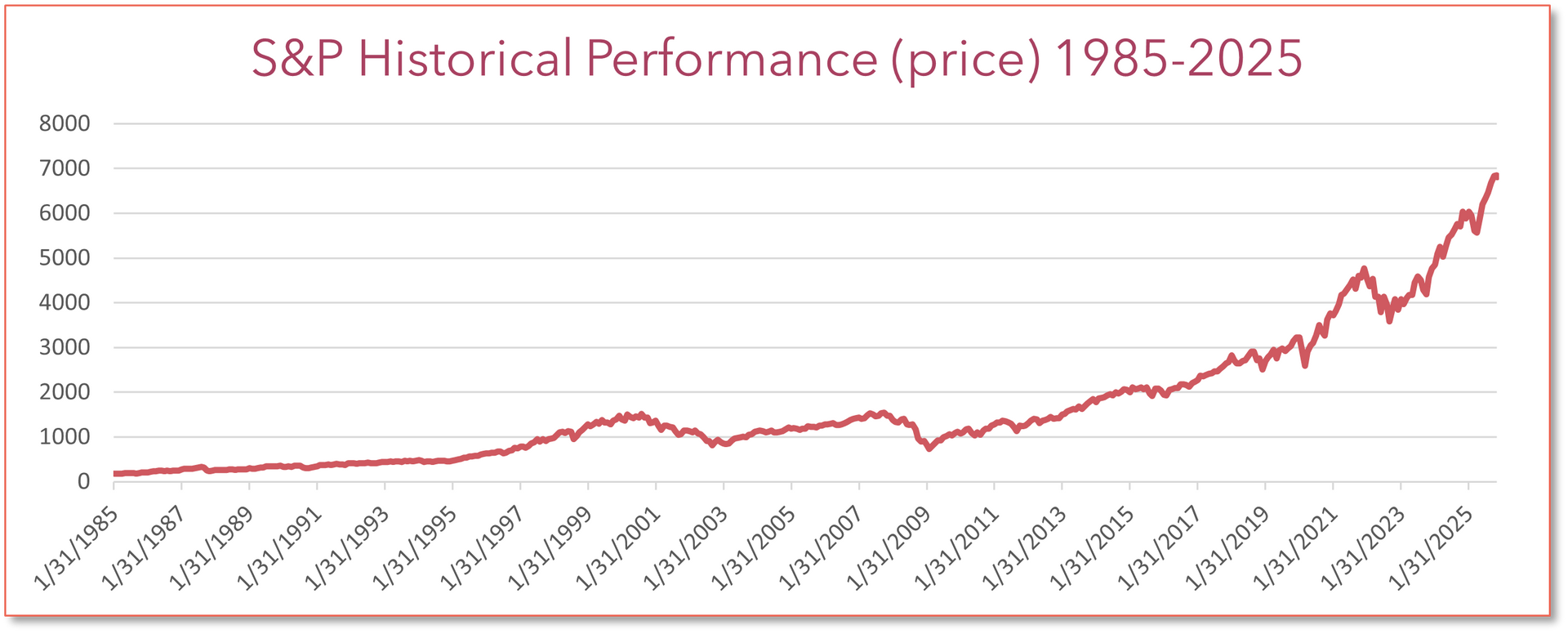
One of the easiest entry points is through the S&P 500 Index fund: INDEXSP.  It includes the 500 largest publicly traded U.S. companies. Basically, it follows the U.S. economy, with all its ups and downs, but overall, the U.S. economy continues to grow.  The chart below shows the historical performance of the S&P 500 from 1985 through December 1, 2025. Although not as exciting as watching individual stocks and companies do their thing, the S&P 500 can be a great place for the passive investor.  Note:  past performance is no guarantee of future performance.

Layer Two: Continue to add to the cake

In order for any financial investment to work long-term, have the potential to grow and help fund retirement, it must be invested in, meaning: consistently add additional money to the investment.


Investing regularly (monthly or per paycheck) regardless of market levels, is one of the simplest ways to reduce emotional mistakes and create a healthy financial habit. This approach is known as dollar-cost averaging:


  • When prices are high, your fixed-dollar investment buys fewer shares
  • When prices are low, it buys more
  • Over time, this smooths out volatility and removes the stress of market timing


Set up an automatic transfer from your checking account to an investment account. Even small amounts, $50, $100 or $200 a month, build real wealth over time.  One by adding additional dollars to the account(s) and second, by taking advantage of compounding.  For more information on how compounding works, read my article explaining compounding.

Optional Add-ons to the Basic Cake


Maybe a three-layer investment cake is wanted…  (or do we dare four?)  Here are some optional add-ons to the basic cake. And some suggested recipe ratios at the bottom of the section.

Add-on #1: Bonds (Government vs Corporate)


Bonds are loans you give to companies or governments in exchange for regular interest payments and the return of your principal at maturity. Government bonds are a specific type of bond issued by a national government and are generally considered safer because they’re backed by the government’s ability to tax and repay its debt. Corporate bonds, by contrast, are issued by companies and usually offer higher interest rates to compensate for higher risk.

Add-on #2: Broad ETFs


ETF stands for Exchange Traded Fund.  It combines multiple individual stocks into a fund that is managed by a specific company and traded on the exchange.  These funds typically focus on either a specific sector or a theme.  The sectors are: Information Technology; Utilities; Energy industry; Consumer Discretionary; Industrials; Materials; Communication Services; Consumer Staples; Healthcare.  Themes could be:  Rare Earth Elements, AI, or Clean Air Energies, for example. 


The advantage: less risk than purchasing a single specific stock, as the fund diversifies with multiple stocks/companies.  


The down side: the group of companies may underperform the market or even lose value.  The same downside as the stock market as a whole, but this is more focused.

Here are some suggested recipes (ratios) to use with these Add-ons.

  1. Warren Buffet’s suggested recipe: 90% S&P 500 Index; 10% Government Bonds
  2. ETF add on Recipe:  80% S&P 500 Index; 10% ETFs; 10% Government Bonds
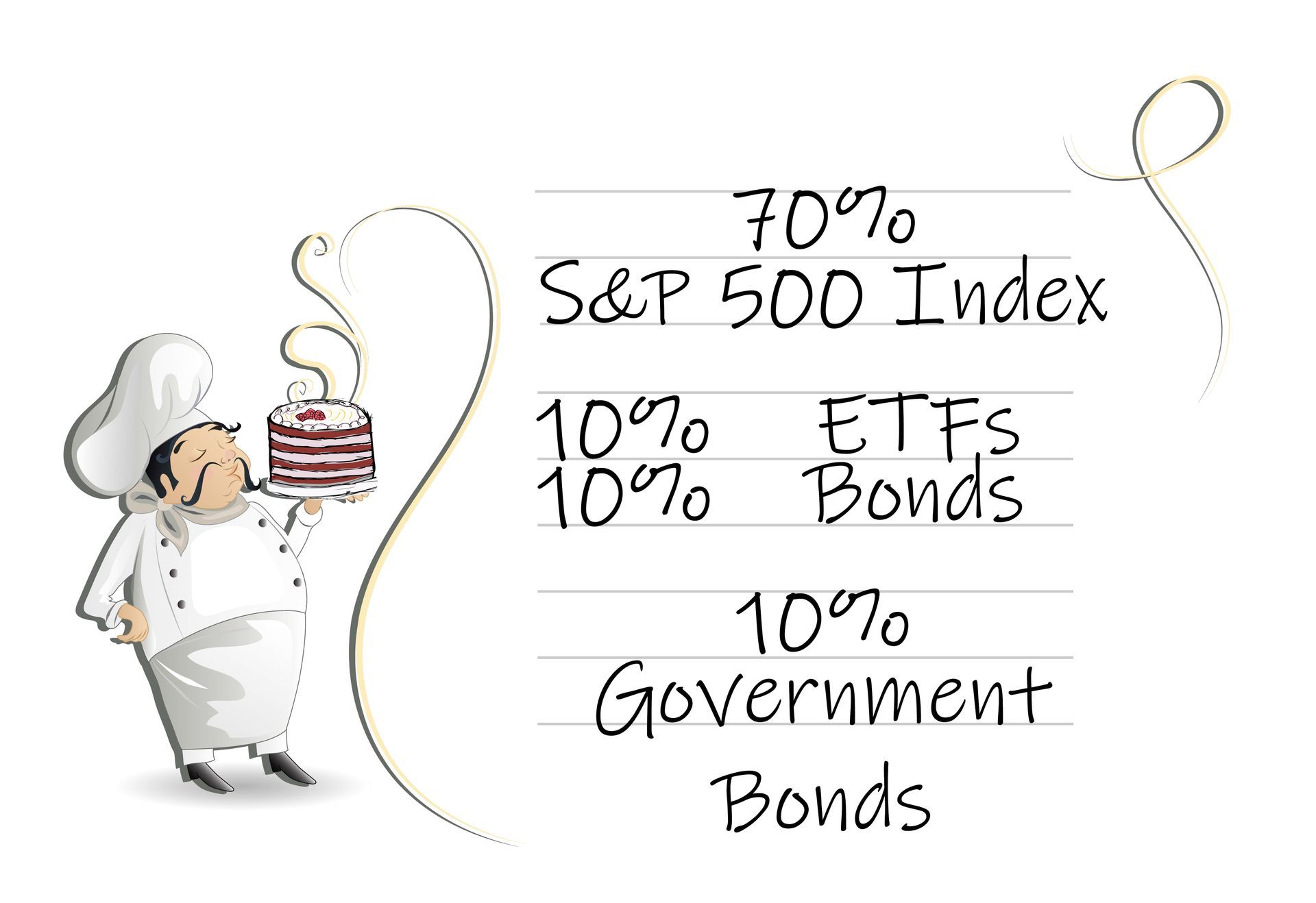
  3. Combo Recipe:  70% S&P 500 Index; 10% ETFs; 10% Bonds; 10% Government Bonds

Recipe Experiments

Many people try a new recipe exactly as written the first time, then start making small substitutions or adjustments to suit their personal tastes—and investing can work the same way. Once a solid “base recipe” is built with core investments and safety nets, a person can experiment with a small amount by adding a dash of something new here or swapping an ingredient there to see how different choices affect the final result. This is where investing becomes fun: by setting aside a small portion (maybe 1% of the total portfolio or an amount that feels comfortable to lose, even as little as $100) as “curiosity capital,” there’s room to experiment with a small amount of risk.

Use it to experiment and learn.


Ideas to try:

  • Buy into a company whose products you love, just to watch how real-world events affect its stock (partial shares or full shares can be purchased).
  • Try a small, speculative ETF and track it against your S&P core over 6 months. (A speculative ETF is an exchange-traded fund that aims to profit from rapid, short-term price fluctuations in high-risk assets or strategies, rather than long-term, stable growth) 
  • Add a mutual fund that has history to it.  A mutual fund pools money from many investors to buy a diversified portfolio of securities, such as stocks and bonds, managed by a professional portfolio manager. This diversification spreads risk and can offer potential steady returns, while professional management handles the investment decisions for a fee. 


Action:      Be sure to start a “learning log” noting what influenced price moves, how it felt, and what was learned about risk and reward.


Suggested Recipe for Experimenting: 

70% S&P 500 Index; 15% ETFs; 10% Government Bonds; 4% Bonds; 1% Play


The purpose of the added 1% isn’t necessarily to make money fast, it’s to build literacy. With small stakes, markets can be observed in action and personally learn reactions to volatility, excitement, and disappointment. That experience makes a person a calmer, wiser investor when larger amounts are on the line.

Cautions


Always have Cash

Cash doesn’t earn much, but it buys flexibility and peace of mind. It’s like having a few cupcakes along with the cake.  The majority of the batter (money) is in the S&P Index fund, but reserve a bit for the unexpected:


  • Maintain 3–6 months of living expenses in an emergency fund.
  • Keep short-term goals (like a vacation fund or home repairs) in high-yield savings or money-market accounts.
  • Cash helps prevent selling investments during downturns to cover expenses.


And having extra cash (beyond the 3-6 months safety net) can allow for taking advantage of opportunities that only cash can create.

Risks & Reality Checks

  • Past performance is not a guarantee. Even the S&P 500 can have long flat or down periods.
  • Volatility is normal. Corrections and bear markets are inevitable.
  • Costs matter. Use low-expense ETFs and avoid unnecessary trading.
  • Behavioral traps. Emotional reactions—panic selling or chasing hype—are the biggest portfolio killers.


Understanding the realities of investing helps a person stay grounded through both rallies and recessions.

Final Thoughts

We covered several different recipes to get started “baking” an investment cake.  To begin, simply choose a recipe and start “baking”.  It’s easy to avoid doing something new or uncomfortable. What if we get it wrong?  But following a recipe makes getting started so much easier.  New recipes can always be explored as desired.


In the years ahead, when it’s finally time to enjoy the investment “cake” that has been patiently baking, the early start will prove worthwhile. Perhaps new financial “recipes” will even be created along the way. And when guidance is needed, a financial “chef” (advisor) can offer support.


There are also far more retirement options than just “cake.” Pies, cookies, and countless other “treats” exist—much like the variety found in a balanced portfolio, where a Financial Advisor can provide insight and direction.


September 2, 2025
Welcome to Part 4 of our Leaking Money series: The Balance of Opposites. Here we dive into the everyday spending decisions that can quietly chip away at financial wellness—often without a person realizing it. Trendy vs. timeless. Cheap vs. quality. Fix vs. replace. New vs. used. Keep vs. upgrade. Most people do one or the other all the time. Always buying new, for example, when used or repaired would work just as well.  Most people go about life with whatever the status quo has always been, rather than actively considering other options. It is less about choosing the “cheaper” version of the opposites and more about recognizing when each option will serve best. Rather than money leaking, an active choice is made. Soon, a variety of options are considered and spending becomes intentional vs habitual. And… ideally investing that difference in the future, whether that is debt reduction or retirement. The goal: plug the holes silently leaking money and invest the saved money elsewhere.
September 2, 2025
Even if the budget is dialed in, retirement saving is being invested, and the big items are being reviewed… those items out of sight and out of mind items may be leaking hard earned money. If left unchecked, it can have long-term consequences, especially for retirement savings. Unlike major financial mistakes, money leaks are typically small, recurring costs that add up significantly over time. Because they’re spread out and relatively minor individually, they rarely trigger alarm bells. A few minutes of awareness and action can save hundreds (or more) over the course of a year! In this four-part series, we explore hidden ways people leak money and cover specific steps to “plug” the holes. This article covers those “out of sight, out of mind” leaks that most people don’t even think about.
By Aaron Picart September 2, 2025
In this four-part series, we explore hidden ways people leak money and cover specific steps to “plug” the holes. It's easy to lose track of spending when small habits add up. These seven shopping behaviors might seem harmless, but they're quietly draining your money—and could be holding you back from a stronger retirement: Online Social Boredom Retail Therapy Occasion Impulse Envy Status Money has a funny way of disappearing. You work hard for it, save diligently, and plan for the future—but somehow, there never seems to be enough left at the end of the month. This phenomenon is known as "leaking money," the gradual and often unnoticed loss of funds through unnecessary expenses, inefficient financial habits, and lack of awareness. If left unchecked, it can have long-term consequences, especially for retirement savings. Unlike major financial mistakes, money leaks are typically small, recurring costs that add up significantly over time. Because they’re spread out and relatively minor individually, they rarely trigger alarm bells. However, their cumulative effect can be devastating to your overall financial health. Hidden Ways Money Leaks while shopping (and actions to take) There are many reasons we shop: needs, as an event, socializing, boredom, therapy, impulsive, envy, status. And many of these cause money leak. Not the kind you plan for, like groceries or back-to-school supplies—but the kinds that sneak up and chips away at goals. Here are some common shopping habits that might be costing you more than you think:
August 7, 2025
What if by making some simple food changes, you could have $62,053 more in your retirement kitty in just ten years? By making simple changes in these five categories, you can make a significant difference. Food Waste Outside the Home Online meal delivery Shopping Composition Shopping Locations Money has a funny way of disappearing. You work hard for it, save diligently, and plan for the future—but somehow, there never seems to be enough left at the end of the month. This phenomenon is known as "leaking money," the gradual and often unnoticed loss of funds through unnecessary expenses, inefficient financial habits, and lack of awareness. If left unchecked, it can have long-term consequences, especially for retirement savings. Unlike major financial mistakes, money leaks are typically small, recurring costs that add up significantly over time. Because they’re spread out and relatively minor individually, they rarely trigger alarm bells. However, their cumulative effect can be devastating to your overall financial health. In this four-part series, we explore hidden ways people leak money and cover specific steps to “plug” the holes. As a bonus, the example savings will be added up for a total amount that could be invested.
By Benjamin Eizenga August 6, 2025
Retirement planning is a lifelong journey that evolves as career, goals, and life circumstances change. Whether just starting a career, in peak earning years, or approaching retirement, taking an organized and strategic approach to managing investments is crucial. This article lays out a roadmap by decade for your retirement journey.
By Karen Hansen August 5, 2025
We all procrastinate in some areas of life—putting off that dentist appointment, delaying the gym membership, or avoiding that home repair project. But when it comes to financial planning, procrastination can have serious long-term consequences. The cost of waiting can translate into lost opportunities, higher expenses, and increased stress. So why do people put off financial planning, and what does it really cost? More importantly, how can you take simple steps today to set yourself up for a more secure future? Let’s break it down.
By Karen Hansen November 5, 2024
When you think about advice from a financial advisor, you probably expect tips on budgeting, retirement planning, or investment strategies. But in today’s digital age, financial security goes beyond managing your money—it also means safeguarding your personal data from hackers and fraudsters.  Cybersecurity may not be the first thing that comes to mind when you think of financial health, but the two are closely linked. A data breach can lead to identity theft, drained accounts, and long-term financial damage. That’s why this article isn’t just about building wealth—it’s about protecting it. Let’s explore how you can defend your finances from hackers, RFID theft, and data leaks, and take steps to ensure your hard-earned money stays safe.
By Karen Hansen November 5, 2024
When you’re in your 20s or 30s, retirement might seem like a distant future, something to worry about later. But the truth is, the decisions you make now can have a massive impact on your financial well-being in the years to come. The key to building a secure financial future lies in understanding one of the most powerful concepts in investing: compounding. In this article, we’ll break down how compounding works, why it’s so crucial to start saving early, and provide examples that illustrate its transformative power. What is Financial Compounding?  Compounding is the process where your investment earns returns not just on the original amount you invested (the principal), but also on the returns that investment has already generated. It’s often referred to as “interest on interest,” and it’s what can turn a small initial investment into a substantial sum over time.
By Karen Hansen November 5, 2024
As you approach your 40s and 50s, retirement is no longer a distant dream—it's rapidly becoming a reality. Whether you’ve been diligently saving and investing for years or just started to take retirement seriously, now is the critical time to review, reassess, and realign your financial strategies. Your future self will thank you for taking the time to make sure you're on the right track. 1. Evaluate Your Current Situation The first step in your retirement planning push is to take stock of where you stand financially. By now, you’ve likely accumulated some savings in a 401(k), IRA, or other retirement accounts. But do you know how much you’ve saved so far and how it aligns with your retirement goals? Example: Let’s say you’re 45 years old with $300,000 saved for retirement. A rough estimate might suggest that you’ll need at least $1 million to $1.5 million to retire comfortably, depending on your lifestyle, health, and desired retirement age. This might seem like a big gap, but with the right planning and adjustments, it’s not insurmountable. Action Step: Calculate your current savings and compare them against a retirement savings benchmark. Use online retirement calculators to get a more personalized estimate of how much you should have saved by now and what you’ll need to save in the coming years.
By Karen Hansen November 5, 2024
Inflation is a term we hear often, especially when the prices of goods and services seem to creep upward over time or the size of a commodity gets smaller for the same price. But what exactly is inflation, and how can we protect our retirement savings from its effects? To build a strong retirement plan, it's crucial to understand how inflation works, what constant dollars mean, and the strategies you can employ to safeguard your hard-earned savings. How Inflation Works Inflation refers to the general rise in prices over time, which reduces the purchasing power of money. In simpler terms, the dollar in your pocket today won’t buy as much in the future as it does now. One of the causes of inflation is the imbalance between supply and demand in an economy, often fueled by factors like increasing costs of production, labor, and demand for goods. Economists generally distinguish between two types of inflation: Demand-pull inflation occurs when the demand for goods and services exceeds supply, driving prices higher. Cost-push inflation happens when the cost of producing goods increases, prompting businesses to raise prices to maintain profit margins. Both forms lead to the same outcome: your money becomes less valuable over time. Inflation is often measured using the Consumer Price Index (CPI), which tracks the price changes in a basket of commonly used goods and services, like cereal, lumber, toothpaste, medical costs. The Concept of Constant Dollar